
Foundations of the Twenty-First Century: Dominique Venner's Le Siècle de 1914.
by Michael O'Meara
Ex: http://www.wermodandwermod.com/
A White Nationalist Reading of . . .
Dominique Venner
Le Siècle de 1914: Utopies, guerres et révolutions en Europe au XXe siècle
Paris: Pygmalion, 2006
“To recreate a new aristocracy is the eternal task of every revolutionary project.” –Guillaume Faye
At the beginning of twentieth century, peoples of European descent ruled the world. They made up a third of its population, occupied half its landmass, controlled Africa, India, Southeast Asia, and parts of coastal China; their industry and technology, along with their philosophy, science, and art, had no rival; the world was theirs and theirs alone.
A century later, all was changed: Peoples of European descent had fallen to less than 9 percent of the world’s population; their lands were everywhere inundated by non-Whites; their industry and technology outsourced to potential enemies; their state, social system, and media taken over by parasitic aliens; and, in the deepest demographic sense, they faced the not-too-distant prospect of biological extinction.
To understand this catastrophic inversion requires some understanding of the period responsible for it. We’re fortunate that after a lifetime studying its key movements, Dominique Venner, our greatest identitarian historian, has set out to chart its biopolitical contours.
Before the Deluge
 As a historical (rather than a chronological) period, the twentieth century begins in 1914, with the onset of the First World War, whose devastating assault on European existence shook the continent in every one of its foundations, destroying not just its ancien régime, but ushering in what Ernst Nolte calls the “European Civil War” of 1917-45 or what some call the “Thirty Years War” of 1914-45. For amidst its storms of fire and steel, there emerged four rival ideologies — American liberalism, Russian Communism, Italian Fascism, and German National Socialism — each of whose ambition was to reshape the postwar order according to its own scheme for collective salvation. Our world, Venner argues, is a product of these contentious ambitions and of the ideological system — liberalism — that prevailed over its rivals.
Before the war of 1914 political ideologies lacked the “religious” fervor of their twentieth-century counterparts. Europe then was more than a geographic assortment of different peoples and states identified with different political creeds. It constituted a single biocivilization (a Race-Nation), whose ethnonational variants embodied alternative facets of the genetic-spiritual legacy bequeathed by the Greeks, the Aryans, and the Cro Magnons. Not a single great phenomenon experienced by any one European people, it followed, was not also experienced by the others: From the megalithic culture of the stone age, to medieval chivalry, to the rise of nationalism. In the modern period, the ties of blood and spirit linking the different European nations took institutional form in the Westphalian state system of 1648, which, with the exception of the revolutionary period (1789-1815), limited their numerous wars and conflicts to family disputes.
The greatest casualty of what contemporaries called the Great War would be the destruction of this system — and of the aristocratic elites who were its incarnation.
On the war’s eve, the aristocracy still represented that historic body whose function was to command, to fight, and to defend. In fact, in one form or another, it had always dominated European life — at least since the Aryans, that offshoot of the White race whose existence was premised on the rule of the “noble.” Though property-based and attached to the permanences of family, tradition, and rank, the pre-war aristocracy bore little resemblance to the decadent hereditary ruling class of liberal historiography. For Venner, it was, as an ideal type, an ever-renewing estate infused with the spirit of honor, duty, and loyalty to what was highest in White existence. As such, it typified its people’s essence, associating nobility with those who put their people’s interests before their own.
Except for republican France and Switzerland, all of Europe’s pre-war monarchical and imperial states were governed by aristocrats, whose Prussian spirit exalted simplicity, austerity, duty, and political incorruptibility. Against the leveling aspersions cast by liberals and democrats, Venner emphasizes the aristocracy’s dynamic, modernist, and genial character — opposed in essence to bourgeois democratic societies, which subordinate everyone to money (the realm of the Jews).

Cataclysm
No one in 1914 quite understood the type of the war they had gotten into. All the general staffs anticipated a short, decisive engagement like the “cabinet wars” of the eighteenth and ninteenth centuries — not realizing it might resemble the American War of Succession, whose closing stages anticipated the “Second-Generation War” of 1914 (a generation of war based on massed firepower, where “artillery conquers, infantry occupies”).
Though a traditional conflict between rival states at the start, by 1917, once the United States entered it, the war had been transformed not just into an industrial and social mobilization of unprecedented scope, but into an ideological crusade between democratic and authoritarian regimes. Worse, the democratic crusaders wouldn’t let the war end the way previous European wars had ended, when the jus publicum europaeum of the Westphalian system mitigated White strife and ensured the integrity of rival states. In the absence of this noble restraint, Europe was mutilated at its core: Nine million combatants were killed, the Hohenzollern, Hapsburg, and Romanov empires shattered, and an even greater hecatomb prepared for the next generation.
In the glow of this holocaust, Woodrow Wilson, the American champion of an anti-aristocratic, anti-European “democratism,” stepped upon the Old World’s stage to proclaim a new order based on liberal governance, free markets, and the egalitarian principle that the sovereign individual takes precedence over community, culture, history, and (in time) race — an order whose underlying principle rested on the rule of money — and, though Venner doesn’t say it, on money’s Chosen Ones.
The untenable Wilsonian settlement of 1918-19 collapsed soon enough, but it was hastened, in some cases provoked, by its ideological rivals. For Wilson’s plutocratic democracy did not go unopposed. In Russia, Communists proposed a more radically egalitarian version of his liberal utopia, a version whose methods differed from America’s market principles, but nevertheless upheld the same raceless materialist commitments born of Enlightenment liberalism. In Germany and Italy, a defensive Europeanism gave rise to more forthrightly anti-liberal ideologies to challenge the anti-Aryan or Jewish ethic of American capitalism and Russian Communism.
In this spirit, Mussolini’s Fascists called for a strong state exalting “authority, order, and justice” to unite Italian producers and soldiers in a national destiny free of the community-killing forces of liberal individualism and Communist collectivism. In a different way, Hitler’s National Socialists fought for a racial order, a Volksgemeinschaft, to overturn the Diktat of the Wilsonian peace, beat back the liberals’ assault on the body and spirit of the nation, and return Germany to its rightful place on the world stage. Both these movements opposing the anti-White subversions of the Wilsonians and Leninists did so, despite their plebeian-Caesarian politics, in a spirit akin to Europe’s ancient warrior aristocracies, whose tradition exalted personal power and regalian purpose.

Wilson’s Democratism
The focus of Venner’s history is the interwar struggle between liberalism, Communism, Fascism, and National Socialism. The focus in this reading is Wilson’s liberal democratism, whose “mission” it was to champion the plutocratic democracy of American capitalist enterprise, as it endeavored to wipe the historical slate clean of its European (especially its German and Catholic) accouterments.
Wilson’s crusading democratism stemmed from the dominant Puritan strain of America’s national tradition. Having settled their New Israel far from the morally compromised Europe they had fled and having identified their election with economic success, the Puritans defined themselves not in terms of their ancestor’s blood and heritage, but (once the spirit of capitalism overwhelmed their Protestant ethic) in terms of the Lockean “pursuit of happiness” — the very notion of which was alien to any sense of history and destiny. Such a Hebraic form of Christianity imbued the Wilsonians with the belief that their system was not only more virtuous than that of other peoples, but that it made them immune to their failings. (Though formally a Southerner, Wilson’s approach to Europe followed in the steps of earlier Northeastern Yankee elites, whose secularized Puritanism, in the form of Unitarian/Social Gospel humanism, motivated their century long assault on the religious and racial practices of the American South.)
 The clash between aristocratic and democratic values — between Europe and America — reflected, of course, a more profound clash. Venner explains it in terms of Oswald Spengler’s Prussianism and Socialism (1919), which argues that the sixteenth-century Reformation produced two opposed visions of Protestant Christianity — the Calvinism of the English and the Lutheran Pietism of the Germans. The German vision rejected the primacy of wealth, comfort, and happiness, exalting the soldier’s aristocratic spirit and the probity this spirit nurtured in Prussian officialdom. English Protestants, by contrast, privileged wealth (a sign of election) and the external freedoms necessary to its pursuit. This made it a secularizing, individualistic, and above all economic “religion,” with each individual having the right to interpret the Book in his own light and thus to justify whatever it took to succeed.
Given England’s influence on America’s formation, Venner sees an analogous process at work in the United States. In the twentieth century, this process took the form of a money-driven variant of Calvinism, whose impetus has been to enfranchise those Puritan/Jewish/liberal/New Class projects that have been such a bane to white existence in the twentieth century: Those projects proposing a rupture with the past, the destruction of historic identities, and the creation of a new world where everything was possible — a new world where Jerusalem takes precedent over Athens, where the Brotherhood of Man is proclaimed with ethnocidal conviction, and America is celebrated as an anti-Europe.
So armed, the Wilsonians set out to destroy Europe’s ancient empires and aristocracies.
The New World
The war’s Wilsonian settlement (premised on the lie of German war guilt) left the traditional order in ruins, but, of even greater consequence, it prepared Europeans for future catastrophes, preeminently the Second World War (1939-45) — which would subject them to Soviet and American occupation and to a Judeo-corporate system intent on de-Europeanizing them by re-programming their morals and mentalities, deconstructing their thought and art, decolonizing their Asian and African empires, and eventually opening their gates to the Third World. The destruction of Europe’s aristocratic heritage had, in effect, been prelude to the ensuing assault on its blood and spirit.
Before the US entered the new world war set off by the failures of the Wilsonian peace, the promulgation of the Atlantic Charter (August 1941) called for another liberal crusade. In this spirit, the Charter’s democratic principles envisioned a postwar order based on monied interests, Anglo-American commerce, and liberal democracy — the foundations of which have become the present anti-White system. As an alliance combining the democratists’ most starry-eyed ideals and hard-headed interests, the US led coalition (the “United Nations”) aimed at destroying not just German Nazism, but the German nation, whose Prussian spirit rebuked everything the Wilsonians represented.

Eisenhower’s “Crusade in Europe” was accordingly waged with a ferocity unknown in European history. The two extra-European powers, the United States and the Soviet Union, were thus each ideologically committed to uprooting whatever remained of Europe’s living heritage. Their “anti-fascist” crusade was especially intent on criminalizing the Entente powers and the European values they embodied. The Nuremberg trials following the war would be the most conspicuous example of this crusading anti-Europeanism, but so too was the Allies’ effort to hunt down, silence, or kill their wartime opponents and to level Europe’s inherently anti-egalitarian order. (In France alone, 600,000 people were imprisoned following the “Liberation” and more than 40,000 summarily executed.)
Broken, demoralized, occupied, Europe in 1945 was ripe for re-education. The occupying powers’ culpablizing crusade would be especially effective in overcoming resistance to the new liberal utopia, even after the former allies embarked on their so-called Cold War (1947-89). Revealingly, American democratists were qualitatively more subversive than their more racially-conscious Russian counterparts. In the western half of the postwar’s US-SU Condominium, the culpabilitization of defeated Germany was extended to all of Western and Central Europe. (In the language of our little black brothers and sisters, original sin now became “a white thing.”) Europeans were henceforth expected to do penance for having once been powerful and creative, for having founded empires, for privileging rank, nobility, and valor, but above all for having been White and favored their own interests at the expense of Jews and other non-Europeans. The very idea of a White or European identity would, in fact, be treated hereafter as a pathology.
Japan, by contrast, suffered no such culpabilitization — not only because it experienced less of it, but also because Japanese culture refused to accept the victors’ image of itself. The culpabilitization of Europeans was so effective not simply because of the occupiers’ unchallenged power, but because it converged with a secularizing Christianity (a Judeo-Christianity?), whose Concordant with Caesar’s realm now sought to turn Europe’s former self-confidence into a form of self-loathing. The “irony” of this culpability (if irony is the word) was that the Europeans’ alleged guilt was a fraud: They had had no monopoly on so-called “crimes against humanity.” (The Anglo-American carpet bombing of civilians and the indiscriminate destruction of Europe’s great cities, the mass population transfers, the organized starvation campaigns, the unprecedented horrors associated with Hamburg, Dresden, Tokyo, Hiroshima, Nagasaki — nothing of this affected the anti-European balance of Allied justice or brought Russian, English, or American war criminals into the dockets).
The Iron Cage
Following the Cold War, in which Europeans were mere spectators, a new view of history was programmed for popular consumption: The view that saw the history of twentieth-century Europe in terms of its struggle for the cause of Holy Democracy, with its market utopia of general prosperity, the limitless liberties of its private life, the glories of its occupiers’ Semitically fabricated mass culture, and its rainbow mixture of diverse races and cultures.
Accordingly, the Soviets’ command economy and totalitarian controlled society gave way after 1989 not to utopia, but to a system animated by the forces of consumption, bureaucracy, spectacle, and sex. For though the democratists’ methods differed from those of the Communists, they too aspired to a raceless economic paradise and, to that end, now resort to totalitarian measures to criminalize, demonize, or pathologize whoever opposes their subversions.
In 1920, in his most famous book, Max Weber pointed out that a modernity subject solely to the market’s economic criteria engenders a ruthless rationalization of human life — what he called “the iron cage.” Venner argues that since 1945 Washington has imposed its version of the iron cage on Europe.
This has especially been the case in the European Union (EU). Though the idea of unification was an old one, Wilson’s heirs favored a model geared not just to Europe’s democratic re-education, but to its transformation into a US economic protectorate, closely integrated into the transnational super-structures which Washington and New York set in place during the course of the Cold War. The Marshall Plan, for example, dictated greater economic cooperation and integration centered on US regulated international trade, while Jean Monnet, the principal architect of the “common market,” was a Wall Street insider, friend to New York Jewish banking interests. Then, after America’s cat paw, Britain, entered the EU in 1972, Europe’s homegrown democratists (”the American Party” which has governed Europe since 1945) gave themselves over entirely to the liberal project, turning Europe into a free-trade zone subject to purely economic consideration. In this spirit, they now define Europe in anti-political (i.e., liberal) terms indifferent to all those historic, traditionalist, and national barriers obstructing the race-mixing imperatives of their monetary reign.
Venner calls the global order born of post-1945 Wilsonianism a “cosmocracy.” The cosmopolitan plutocracy of this cosmocracy, which became globally hegemonic after Communism’s collapse, makes the nation state obsolete, denationalizes its elites, and racially mixes incompatible peoples and cultures in the name of an abstract, quantitatively-defined Humanity indifferent to the survival of European peoples. Heir to liberalism’s inherent cosmopolitanism, as well as to Communist internationalism and the Judeo-Christian distortion of White identity, the collective culpabilitization that has been used since 1945 to manipulate the European conscience remains one of the cosmocracy’s most important supports. For to deflect criticism and squelch resistance, liberals and ex-Communists (whose chief distinction is their indifference to race, breeding, and every qualitative ascriptions resistant to the Judeo-liberal conception of democracy) need only appeal to their “anti-hate” laws and “human rights” to silence whoever challenges their inquisitional reign.


Having been guilty of the Holocaust, colonialism, and other so-called forms of racism, Europeans are now expected to open their arms to the refuse of the overpopulated Third World. The colored invasion now transforming Europe is gradually compelling Europeans to awake to what is happening to them and to take steps, however tentative at this point, toward the Reconquest of their imperiled homeland. But no one in their “democratic” ruling elites — these bloodless executors of that transnational super structure whose Hebraic spirit champions the interests of the Bilderbergers and Trilaterals, the established parties, the MSM, the NGOs, and the universities, whose guiding arm is the Jewish dominated banking system headquartered in New York, and whose principal geopolitical orientation is the Washington-London-Tel Aviv axis — no one in these elites has the slightest understanding of what is happening under their very noses, seemingly oblivious or indifferent to what the importation of millions of Africans and Asians means to Europe.
Fortunately for Europe’s scattered remnant (and it was a remnant that reconquered Spain), the cosmocracy is creating a crisis of such massive proportion that it is likely to provoke a catastrophic collapse that will give Whites one last chance to regain control of their destiny.
The Beginning that Stands Before Us
Europeans after 1945 fell into dormition, losing all consciousness of who they were as a people. Like Germans after the original Thirty Years Wars (1618-48), their thirty-year blood expenditure left them totally depleted, forcing them off the historical stage and into the arms of everything that today threatens their existence.
Dormition, though, is not death. This seems especially the case in that the democratists’ utopia has come to rest on increasingly uncertain foundations. Its objective failures, I think it is fair to argue, are more and more imposing themselves on the collective consciousness, while, subjectively, Europe’s once cowed and beaten nations are gradually beginning to reject the democratists’ cosmopolitan agenda, as national-populist parties snip away at the authority of the established regime. The rebellion of May 2005, in which the French, then the Dutch electorates, rejected the proposed EU constitution — and did so against all the concerted forces of the existing system — was a revenge of sorts on May 1945 and on the Judeo-liberal vision of a Europe indifferent to its own genetic-cultural heritage. Other, more meaningful rebellions have also begun to stir.
Bad as things have become, there is thus still reason for hope. Venner stresses that history never ends — wars are never decisively won. Fukuyama had no sooner proclaimed “the end of history” — the undisputed triumph of Wilson’s market model of world order — than Huntington’s Clash of Civilizations predicted that the end of the Cold War’s ideological strife would lead to even more apocalyptic conflicts.
Few defeats, then, are irredeemable, but only as long as the defeated remain heroic: For our vision of the past (our vision of who we were) inevitably shapes what we are to become. Venner’s study is cause, though, not for optimism, but for caution and circumspection. Every European of good stock, he claims, cannot but admire the reckless heroism of Homer’s Achilles, but the greatest Homeric hero is Ulysses — Ulysses of the thousand guises, who used all his patience and cunning to regain his home.
Historically, resistance, reconquest, and renaissance are the Ulyssean work of small groups bound by the asceticism of ancient military orders and inspired by a will for action, thought, and decision. Not coincidentally, the struggles such groups wage create new aristocracies, for war is the most merciless of the selective forces. Only this, Venner believes, will enable us to regain our lands and all that we once were.
As Europeans enter the twenty-first century, one thing alone seems clear: The future will not resemble the present. The unimaginable is already waiting in the wings. But though history is full of the unforeseeable, the forces of culture, race, and history never cease to weight on a people’s destiny, as they intersect with present circumstance to affect the future’s course. In this Venner finds hope. For his Europe (which has existed for 30,000 years) is the Europe whose spirit struggles for all that is noble.
Source: VNN, 21 June 2007.



 del.icio.us
 Digg
Digg Facebook
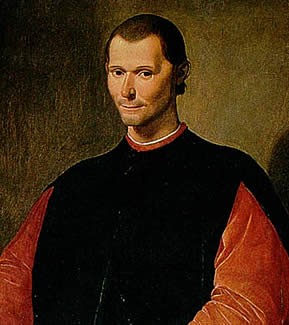 Even his own name has been turned against him. Indeed it is hardly flattering to be described as “Machiavellian.” One immediately envisions a hint of cunning and treacherous violence. And yet what led Machiavelli to write his most famous and scandalous works, The Prince

 In 1814, at the end of the Napoleonic wars, Benjamin Constant wrote with relief: “We have arrived at the age of commerce, the age that must necessarily replace that of war, as the age of war necessarily had to precede it.” Naïve Benjamin! He took up the very widespread idea of indefinite progress supporting the advent of peace between men and nations.

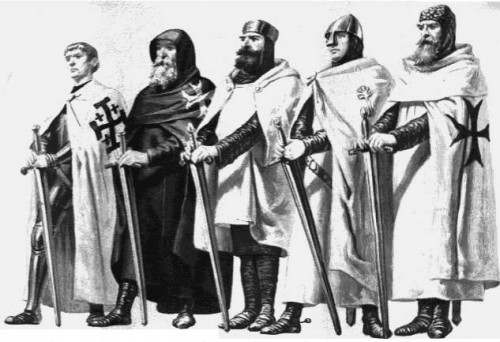

 Depuis la fin des deux guerres mondiales et leur débauche de violences, l’Europe est « entrée en dormition » (1). Les Européens ne le savent pas. Tout est fait pour leur masquer cette réalité. Pourtant cet état de « dormition » n’a pas cessé de peser. Jour après jour, se manifeste l’impuissance européenne. La démonstration en a été assénée une nouvelle fois durant la crise de la zone Euro au printemps 2010, prouvant des divergences profondes et l’incapacité d’une volonté politique unanime. La preuve de notre « dormition » est tout aussi visible en Afghanistan, dans le rôle humiliant de forces supplétives assigné aux troupes européennes à la disposition des États-Unis (OTAN).
